Instagram

May 9, 2015

Food in Pictures

This is a collection of my own personal photos, taken within the past few months.  I hope it inspires you to cook more and just enjoy life with those you love.  Comments welcome.  Also, click on the Instagram icon and follow me for daily photos and posts from around the world!

Flavor your rice cooking water with fresh jasmine! - Restaurant NAHM, Bangkok
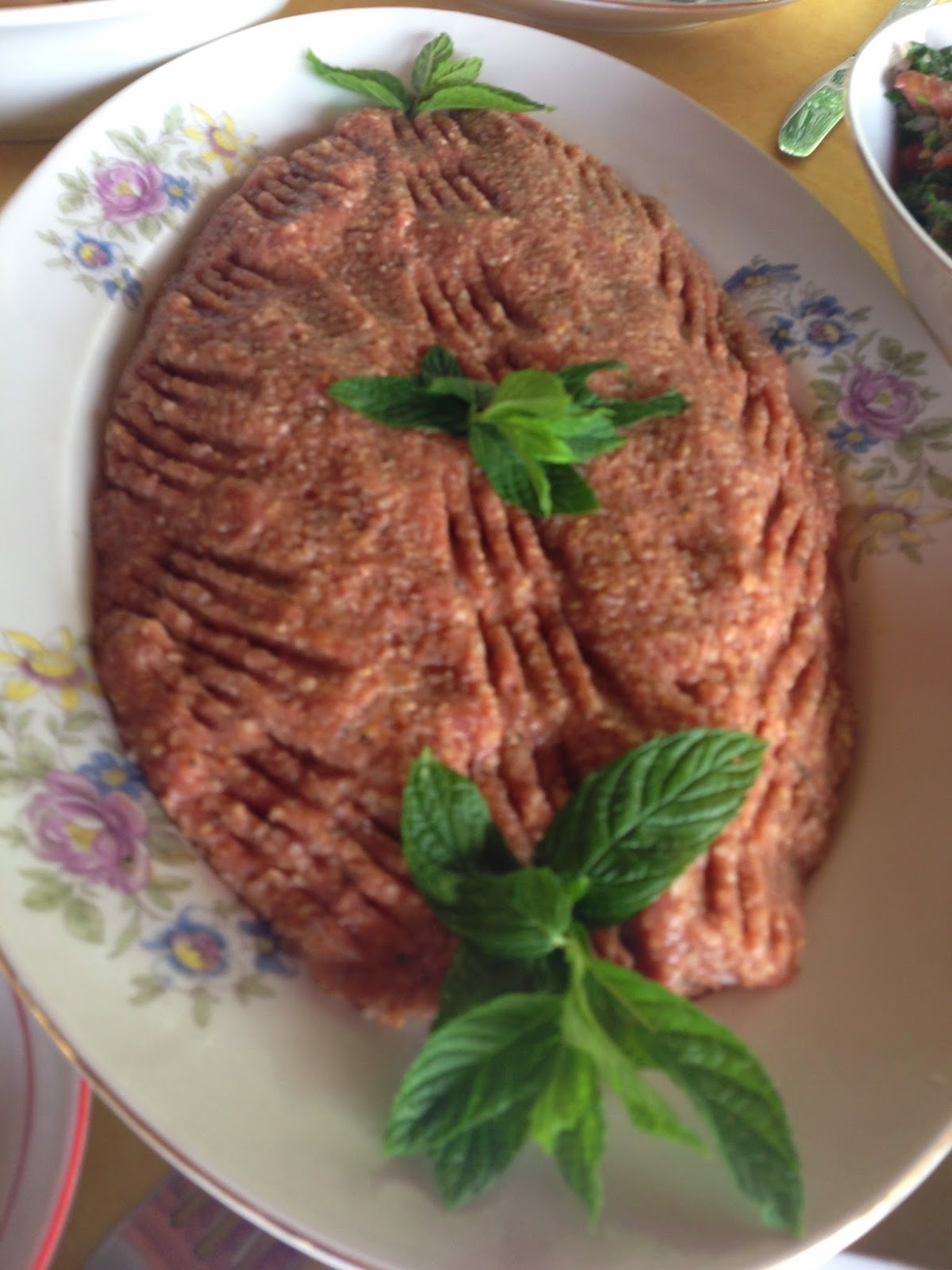
Making kibbeh the old-fashioned way in Zahleh, Lebanon. Lamb, bulgur and spice.. and everything nice!

Team effort: pounding the kibbeh (aka Lebanese Tartare) in a giant and extremely heavy stone mortar.

My parents' terrace, place of some of my fondest food memories.

The garden of my childhood in Broumana, Lebanon.

An idea for Tomato Season: heirloom tomatoes, garlic paste: garlic, salt, parsley & olive oil prepared in a mortar & pestle. Heaven on a plate!

At my table a few weeks ago: Zaatar thyme pies, Armenian Bulgur Salad, Lebanese Chicken Skewers, from-scratch Hummus and pickled wild cucumbers and aubergines, stuffed with walnuts and peppers. Pickles are always a good accompaniment to a Mid-Eastern meal.

An idea for more healthy appetizers? Fresh organic fava beans and peas in a pod, with freshly-cut carrots, sprinkled with lemon juice.  Deliciously simple.

The finished product: Lebanese Tartare (Kibbeh Nayyeh). Scoop it up with pita, a tiny bit of garlic paste and a piece of fresh white onion.  The perfect bite!

Mom's Table, any given Sunday. All veg courtesy of Dad's garden. Broumana, Lebanon.

November 20, 2014

A Flawless Recipe for Autumn

There is no better season for cooks to play in their kitchens than Autumn.  When the weather starts cooling down and tarp covers are falling on barbecue grills like the last curtain call for an actress past her prime, it's time to head back inside!

Just as the leaves begin to turn on the neighborhood trees, the colors of farmers markets follow suit.  Summer's vibrantly green herbs and the bright red hues of tomatoes give way to the deeper, richer jewel tones of carrots, beets and eggplant.  Vine-growing fruits like butternut squash (yes, it's actually a fruit!) also make an appearance this time of year, having been planted in the previous months.

With that in mind, I've created a vegetarian recipe that combines roasted carrots and butternut squash, with the Eastern Mediterranean touches of Tahini and Zaatar.  The complex flavors from the roasting process pair beautifully with the citrus, nutty flavor of the tahini dressing.  Serve it as a starter, alongside your favorite protein or enjoy it as a vegetarian main course.

Easy to prepare and laden with healthful minerals, anti-oxidants and vitamins, this is now my must-have dish for Autumn! 

Roasted Carrots & Butternut Squash with Tahini & Zaatar
6 servings

1 lb. rainbow (or regular) carrots, peeled and cut into 3-inch chunks
1 large butternut squash
1/2 lb. brussels sprouts, halved (optional)
2 medium red onions, peeled and sliced
2 Tbs. olive oil + 1 Tsp.
2 Tsp. salt
1 Tsp. pepper
1/2 cup pine nuts
3/4 cup flat-leaf parsley, chopped
2.5 Tbsp. lemon juice
2 Tbsp. cold water
1 large clove of garlic, crushed
1/3 cup of good tahini 
2 Tbs. zaatar mix

Best enjoyed at room temperature, this dish keeps well refrigerated for up to 5 days.

Preheat your oven to 425F (220C).  Clean the outside of the squash with a washcloth under cold running water.  Dry with a towel then cut in half lengthwise.  Discard the stringy fibers and seeds and cut into 1.5-inch thick wedges.  Place in a large mixing bowl and add the carrots, onions and if you like them, the brussels sprouts, too!  Toss together with olive oil, salt and pepper and roast, squash skin side down for about 45 minutes or until completely soft.  Keep an eye on the onions as they may take less time to cook. When done, remove roasting pan from the oven and set aside to cool.

Meanwhile, heat the rest of the olive oil in a small pan and cook the pine nuts on medium-low heat until golden brown, stirring frequently.  Transfer to a small bowl with the oil and set aside to cool.  To make the tahini dressing, place the tahini, lemon juice and water in a small bowl and add a pinch of salt.  Mix well.

Arrange the roasted vegetables on a serving platter, drizzle the tahini dressing on top, followed by the olive oil pine nuts and the zaatar, and garnish with the chopped parsley.

Note: Change things up a little.  This makes a perfect side dish for your Thanksgiving meal!

I was featured in GQ UK's December issue!
 
I also appeared in the New York Times!

July 16, 2014

I Say Batata.


I am certain there is a word for “potato” in almost every language.  After all, it is one of the most prominent and best loved foods in the world.  The potato sits at number 3 in terms of worldwide human consumption, after wheat and rice, and the latest statistics show global crop production at a staggering 300 million metric tons annually.    

Batata is the old Spanish term from which the word potato is said to have originated.  It is also the Arabic term for the word.  In Beirut, where I grew up, we ate lots of Batata.  Fries were this fat kid’s favorite food! 

Boiled, fried, baked, roasted or even gnocchi’d, potatoes are a workhorse veg.  “The Mariah Carey of vegetables, reaching many depths and stratospheres”, as one witty food critic once wrote.  

There are over 4000 recorded potato varieties worldwide, most of which are grown in the Andes region of South America.  Traces of its cultivation have been found in Peru dating back 10,000 years.  It even grows in incredibly harsh climates like that of Greenland, where they call it naatsiiat - which literally translates to ‘something for which one waits a long time to grow’.

I love ordering "Pommes Landaises" whenever I spot it on restaurant menus.  My favorite French bistro in San Francisco, L’Ardoise is famous for them.  Slices of Yukon Gold fried in duck fat.  No need for a recipe here!  Just add salt.

My dear friend and home-cook extraordinaire, Tamara sent me one of her fabulous recipes for a Lebanese baked potato pie, called Kebbet Batata in Arabic.  The word “Kebbet” sounds similar to Cabot, as in Jessica Fletcher’s Cabot Cove, from the popular 80’s TV series Murder, She Wrote.  Here’s how you make it:

delicious onion and walnut filling between the two layers of potato


Lebanese Potato Pie (Kebbet Batata)
6 servings

3 tablespoons vegetable oil
2 large yellow onions, sliced into wings
3 large Desiree potatoes (new potatoes are also great), peeled and cubed
1 cup fine bulgur wheat (#1), soaked in water for 1 hour
1 cup all-purpose flour
1 cup chopped fresh cilantro
1.5 tablespoons sumac
1 cup regular bread crumbs or panko
2 cups chopped toasted walnuts
Salt & pepper to taste

Filling:
Preheat your oven to 400 F (200 C).  Heat the vegetable oil in a good-size skillet and fry the onion wings with a sprinkle of salt until pale.  Add a good pinch of pepper, sumac & walnuts and mix to combine.  Remove from heat and set aside.

Potato Dough:
In a large pot, cover the potatoes with water, add a generous pinch of salt and bring to a boil.  Cook the potatoes until fork-tender.  Drain and set aside to cool slightly.  Once cooled, mash the boiled potatoes well.  Squeeze the excess water out of the pre-soaked bulgur then fold it into the potatoes.  Add the cilantro and knead a few times until a dough-like texture is obtained.  Taste for salt and add more if needed. 

Assembly:
Brush your favorite baking dish (I like to use the classic oblong Pyrex dish for this recipe) with a little vegetable oil to coat the base.  Spread a thin layer of the potato mix (about 1 inch) evenly around the base, then top with the onion filling.  Repeat with another layer of potato mix on top of the filling to cover, also about 1 inch thick.  Sprinkle the bread crumbs on top and bake until the bread crumbs become golden brown, 20-30 minutes.  Serve warm or at room temperature with your favorite salad!   

Note: Dip your hands in a little vegetable oil as you build the pie layers.  This will prevent the dough from sticking to your hands and makes the assembly a breeze.  My classic Lebanese salad dressing which you can find in an older Ten Potatoes blog post is perfect for making a salad that can stand up to the bold flavors of the potato pie.

Bon Appétit, and thank you Tamara!

May 18, 2014

Moments of Culinary Contemplation

Without getting too sappy, there are moments in the life of a food enthusiast that are quite emotional, they are worth pondering over and writing about.  One such moment took place a few weeks ago in London, where I found myself sharing a lunch table with two of the world's most recognized and respected culinary figures.

In fact, the vast majority of the world's top Chefs were present at Nuno Mendez's Chiltern Tavern in Marylebone that day.  The luncheon was a celebration of the World's 50 Best Restaurants Awards for 2014.  Fortunately, my day job affords me the opportunity to participate in such eponymous events.  The feeling was that of sheer awe.

Right to Left: Tanongsak Yordwai & David Thompson of Nahm, Mason Florence, the Academy Chair of Southeast Asia, me, Fergus Henderson & Trevor Gulliver of St. John
I was honored and delighted to be having a meal with David Thompson, Asia's No. 1 Chef 2014 (Restaurant Nahm, Bangkok) and the winner of the World's Lifetime Achievement Award, Chef Fergus Henderson (St. John, London).  Two legendary men in their own right.  Nothing could be wrong with the world.

Thompson, an Australian, almost single-handedly reworked how we cook and eat Thai food. In his quest for perfecting his Thai palate and cooking skills, he uncovered and studied recipes put together by Thai families at funerals.  Books for the dead that contained the deceased's favorite recipes.  By doing so, Thompson brought back hundreds of years of tradition and experimentation to a cuisine that's already steeped in history.  A truly fabled Chef d'Oeuvre.  (Pun very much intended).

As for Henderson, he pioneered the nose-to-tail concept of cooking with offal, a trend that continues to gain popularity worldwide.  With no formal training, he never worked under any other Chef before opening St. John, a shining beacon to British cuisine.

The inimitable Trevor Gulliver, Fergus Henderson's business partner at Restaurant St. John

Here's another photo to mark this fabulous occasion, as well as the video of the awards themselves.  You may notice I had a broken arm on stage (yes, again!),  Don't believe a word Mark the presenter said about how I got injured.  Send me an message if you want to know the REAL story!

With Switzerland's Top Chef and 50 Best winner, Andreas Caminada of Schloss Schauenstein